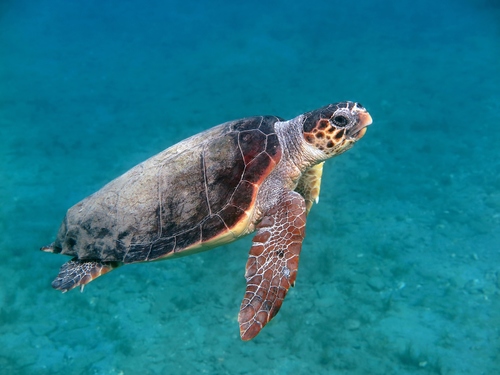
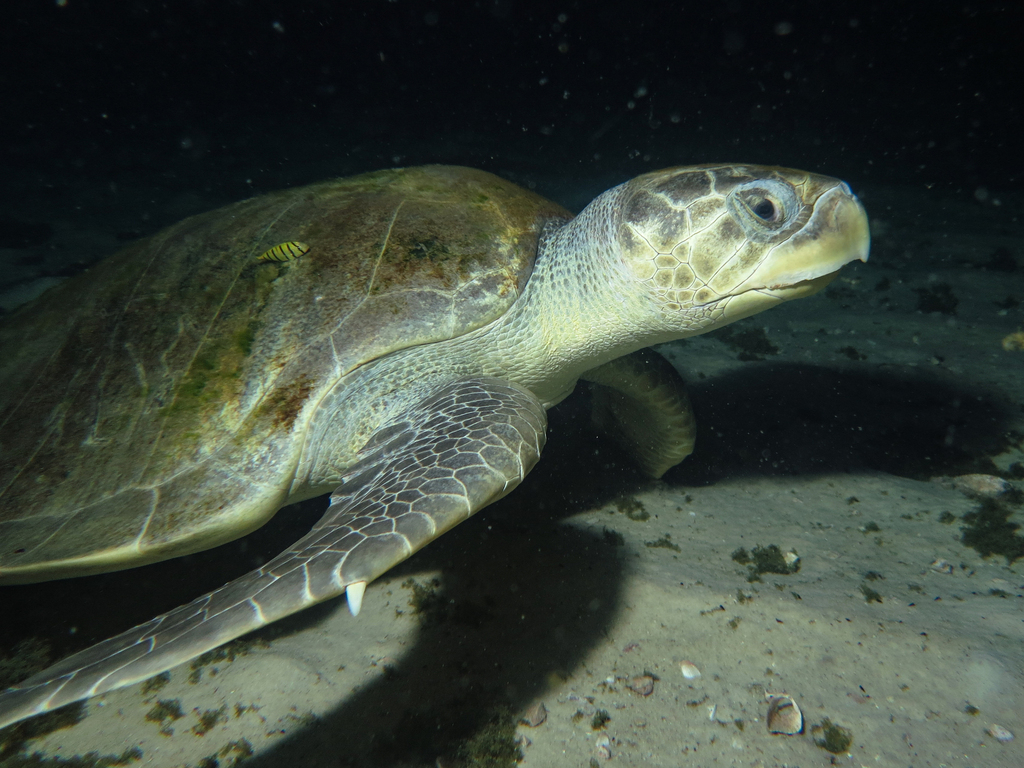
Sea turtles swimming above a coral reef

Learn about sea turtles in Việt Nam

Sea Turtles in Việt Nam

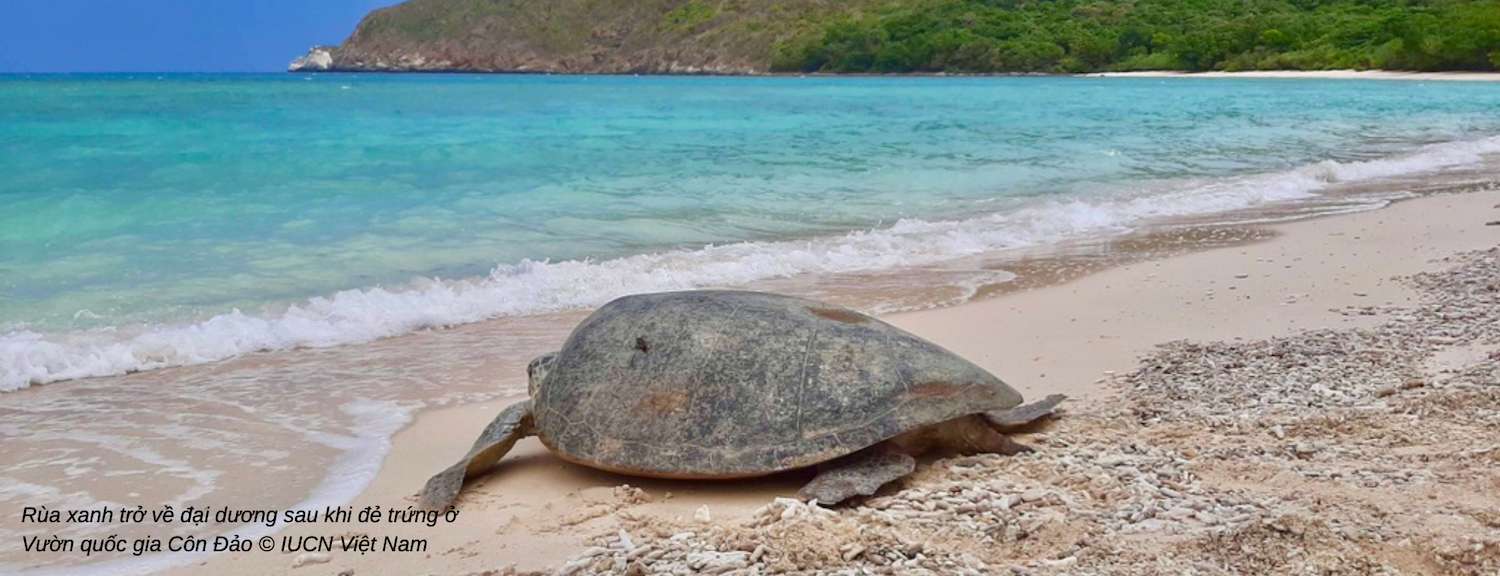
Green Turtle

Chelonia mydas

LCLeast Concern

Herbivorous sea turtle often found in seagrass meadows and near coral reefs, especially in Côn Đảo and central coast waters.

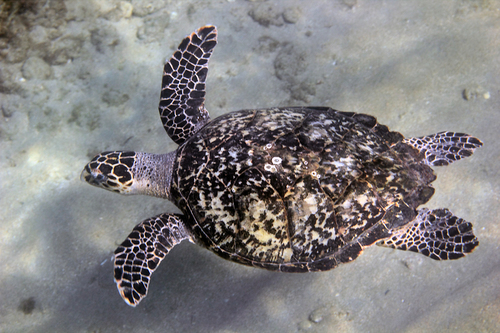
Hawksbill Turtle

Eretmochelys imbricata

CRCritically Endangered

Recognized by its narrow pointed beak and beautifully patterned shell; heavily impacted by illegal trade and habitat loss.

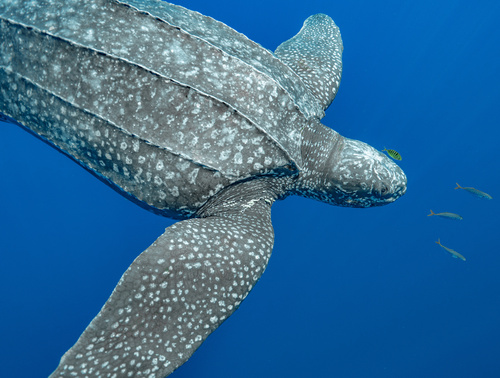
Leatherback Turtle

Dermochelys coriacea

VUVulnerable

The largest sea turtle species, with a soft leathery shell; sightings in Việt Nam are rare but significant.

Loggerhead Turtle

Caretta caretta

VUVulnerable

Powerful jaws adapted for hard-shelled prey; recorded in Vietnamese waters, especially offshore.

Olive Ridley

Lepidochelys olivacea

VUVulnerable

Small to medium-sized turtle, known for mass nesting events in some regions; vulnerable to bycatch in fisheries.

Habitats, Life Cycle & Major Threats

Nesting beaches

Sea turtles need quiet sandy beaches above the high-tide line where females can dig nests and lay eggs. In Viet Nam today, regular nesting is mainly by green turtles and is concentrated at Côn Đảo; Núi Chúa, Hòn Cau, and a few other coastal beaches record smaller numbers.

Nesting success depends on suitable sand, dark beaches, and few obstacles. Artificial lighting, beach driving, coastal structures, and erosion can deter nesting females or disorient hatchlings.

Foraging grounds & migration

After leaving nesting beaches, turtles use different habitats depending on species and life stage: hatchlings and juveniles often move offshore, while older turtles may forage in seagrass meadows, coral reefs, coastal waters, or deep offshore areas.

Satellite tracking shows that green turtles nesting at Côn Đảo can migrate to foraging areas in Viet Nam and neighboring countries, so conservation must connect nesting beaches, feeding grounds, and regional cooperation.

Publications & Resources

101 Questions & Answers about Marine Turtle Conservation

2015

A comprehensive document addressing 101 frequently asked questions about marine turtle conservation, compiled based on field experience of IUCN Vietnam and partners over more than a decade. The document aims to provide basic knowledge, answer questions, and offer practical guidance for managers, park staff, local communities, and volunteers involved in marine turtle conservation.

Open resource →